Cocktails · Gin
Martini RecipeHow to Make a Classic Gin Martini (Plus a Zero-Proof Twin)
How to make a classic gin martini: the right ratio, shaken or stirred, olive or twist, and five variations from wet to dry, each with a zero-proof twin.
6 min read5 drinks ⇄ 5 twins ↓
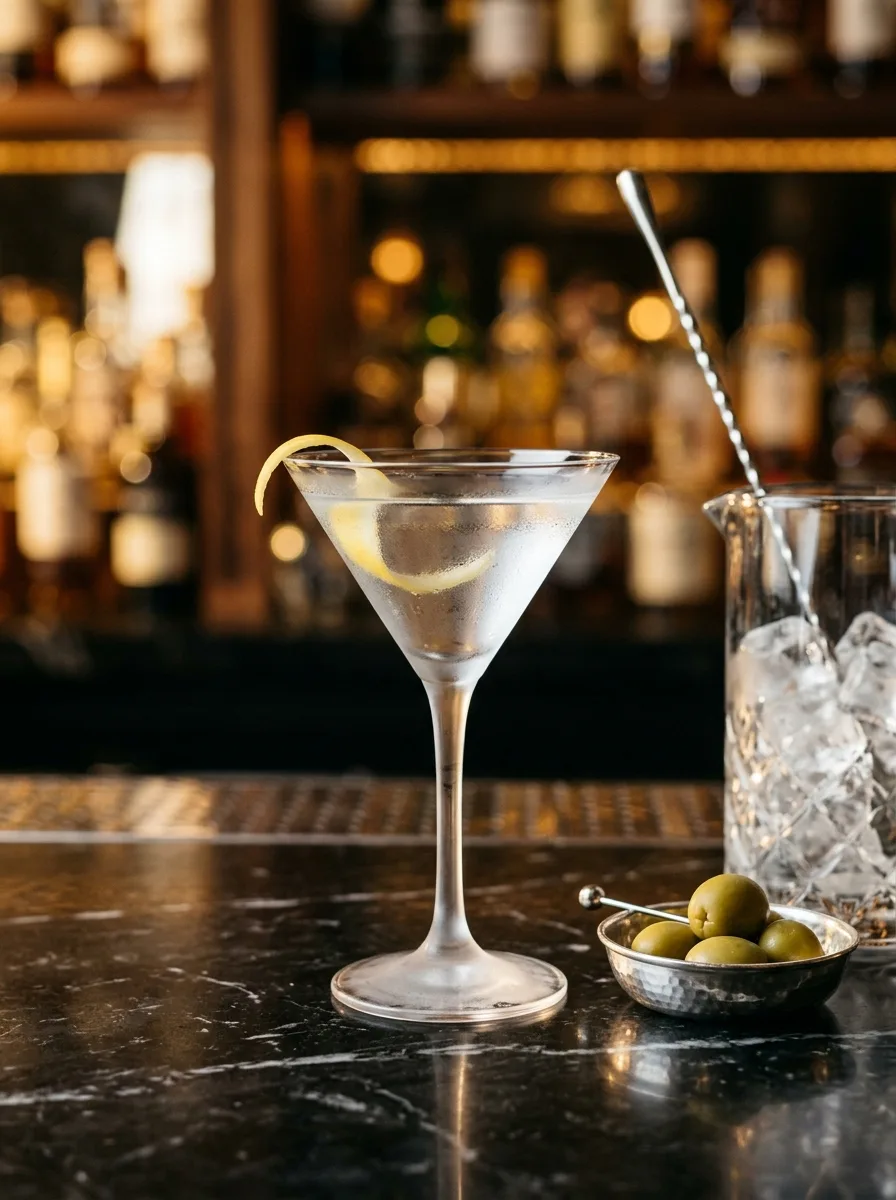
A classic martini is two things, gin and dry vermouth, stirred with ice until very cold and strained into a chilled glass. That is the whole drink, which is why every detail shows: the ratio, the ice, how long you stir and what you put on top.
This martini recipe gives you the modern default (about 5 parts gin to 1 part vermouth), then walks through the wet, perfect, Gibson and 50/50 versions so you can find your own. Every card also has a zero-proof twin, built to be dry, cold and botanical rather than just “gin-free”.
What Is a Martini?
A martini is a stirred, spirit-forward cocktail of gin and dry vermouth, served “up” (chilled, no ice) in a stemmed glass. Gin is the original base; swap in vodka and it becomes a vodka martini, add olive brine and it is a dirty martini. Anything served in a martini glass is not automatically a martini, which is why the types of martinis guide sorts the real family from the “-tini” drinks.
The ratio has drifted over a century. Early martinis were closer to half gin, half vermouth; today most bars pour about five parts gin to one part vermouth, and many drinkers go drier still.
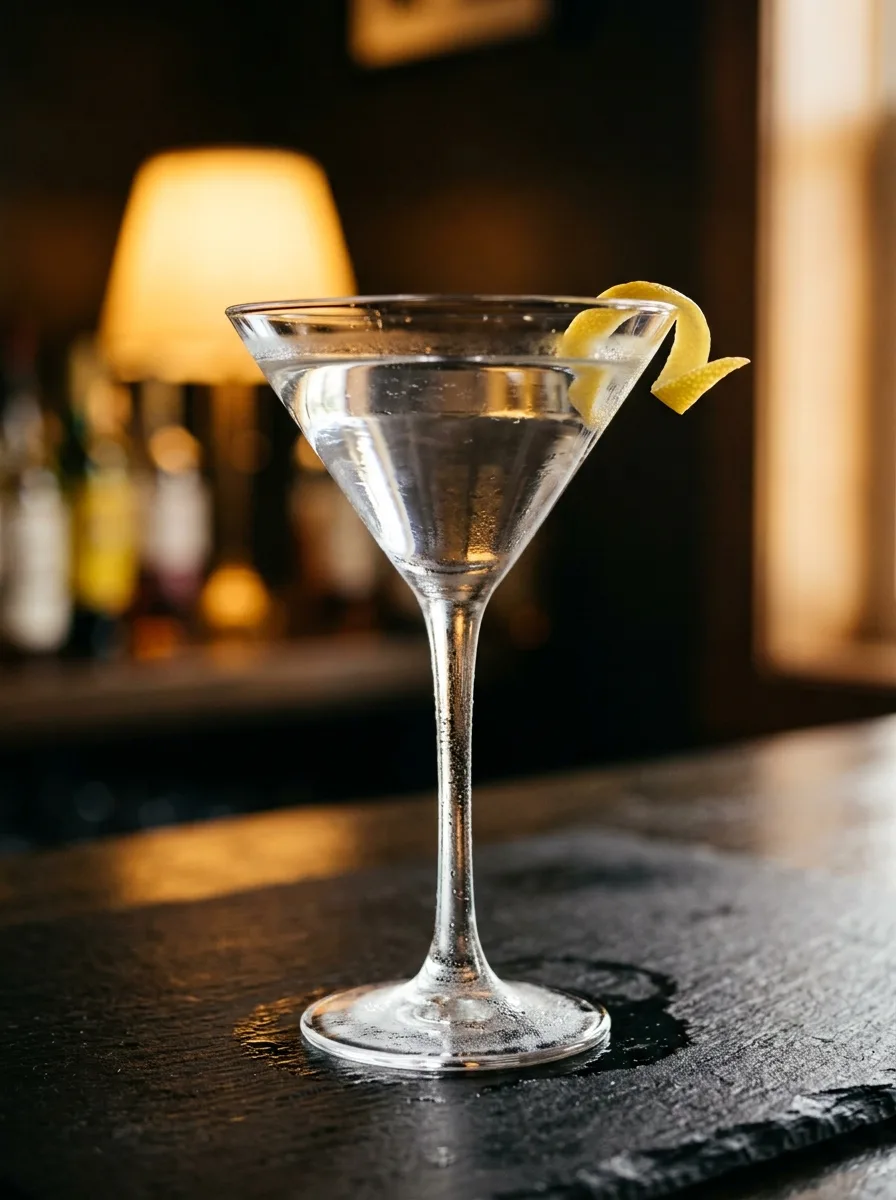
What Goes in a Classic Martini?
You need four ingredients and three tools. Use a good, fresh dry vermouth (it is wine, so it goes stale: keep the bottle in the fridge and use it within about a month) and a gin you actually enjoy sipping.
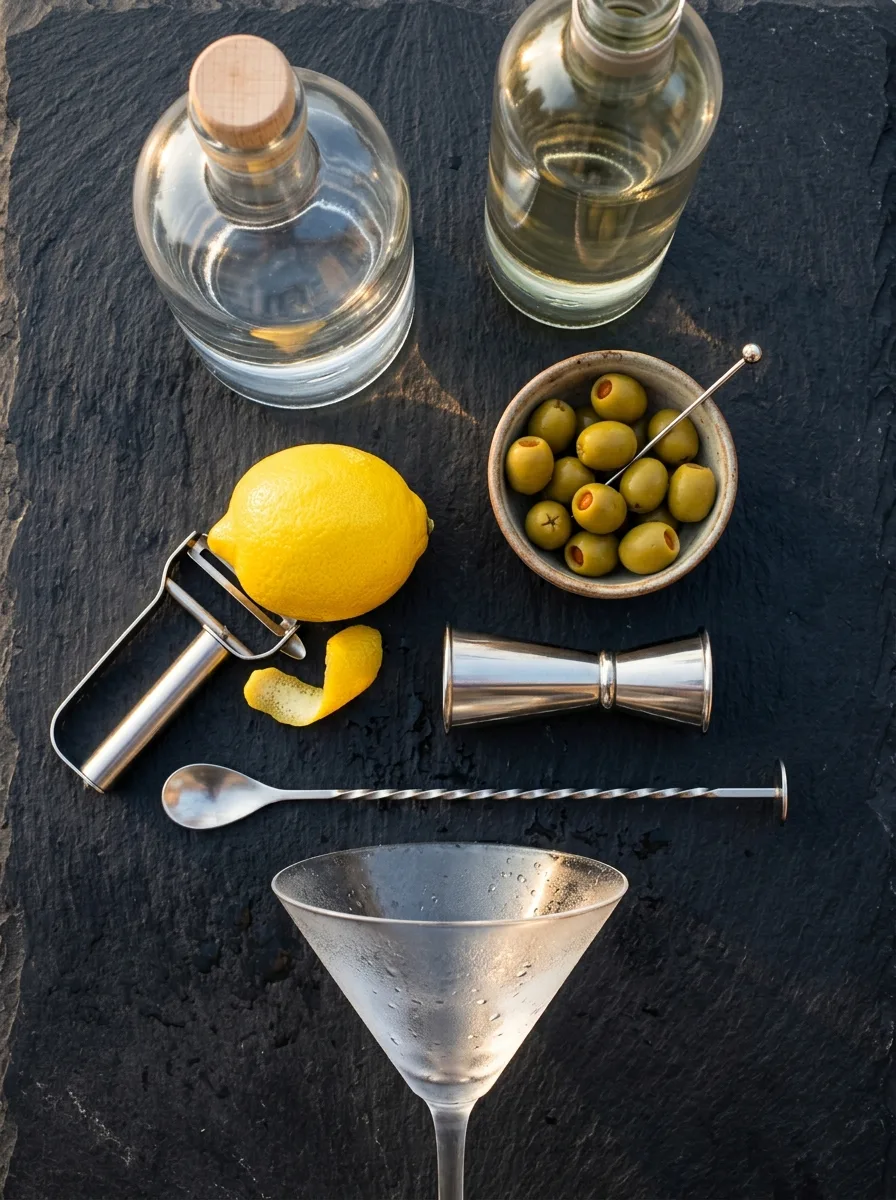
- Gin, 2½ oz (75 ml). A London dry gin gives the classic juniper-forward martini.
- Dry vermouth, ½ oz (15 ml).
- Orange bitters, 1 dash, optional but traditional.
- Garnish: a lemon twist or green olives.
- Tools: a mixing glass, a bar spoon, a jigger and a strainer. Chill the glass in the freezer for at least 20 minutes first.
How to Make a Martini, Step by Step
The Dry Martini card below is the one to learn first. Everything else on this page is a change to its ratio or its garnish.
· Cocktail spec · Zero-proof spec
Martini glassStirred3 minStrong · 30%
Martini glassStirred3 minZero-proof · 0.0%
The pour · 3 oz
The pour · 3 oz
Dry Martini
Juniper Tea Martini
Gin and a whisper of dry vermouth, stirred ice-cold.
Ingredients (1 drink)
GarnishLemon twist or green olives
Ingredients (1 drink)
GarnishLemon twist or green olives
Method
- 1Fill a mixing glass with ice and add the gin, vermouth and bitters.
- 2Stir for 20 to 30 seconds, until the glass is frosted.
- 3Strain into a chilled martini glass and express a lemon peel over the top, or add olives.
Method
- 1Fill a mixing glass with ice and add the tea, verjus, bitters and salt.
- 2Stir for 20 to 30 seconds and strain into a frozen glass.
- 3Express a lemon peel over the top.
How the swap works
Black tea brings gin's dry tannin, juniper berries add the pine, verjus replaces vermouth's tart wine edge and the salt rounds it out.
Enjoy responsibly · legal drinking age only · Zero-proof twin · · 1 oz = 30 ml
- Put the glass in the freezer 20 minutes ahead, or fill it with ice and water while you work.
- Fill a mixing glass two-thirds with fresh, hard ice, then add the gin, vermouth and bitters.
- stir for 20 to 30 seconds. The outside of the glass should frost and feel painfully cold.
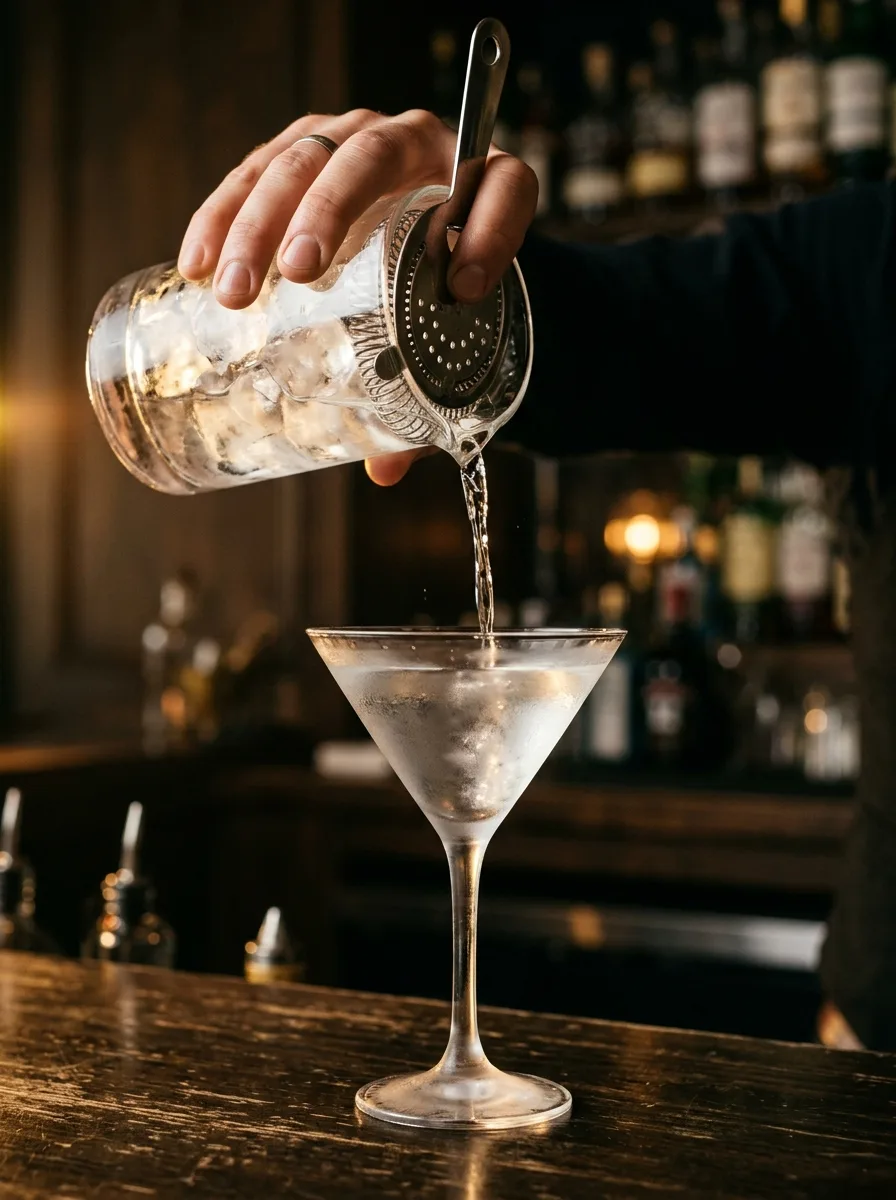
- Empty your serving glass and strain the martini straight into it.
- Express a lemon peel over the top (or add olives) and serve at once.
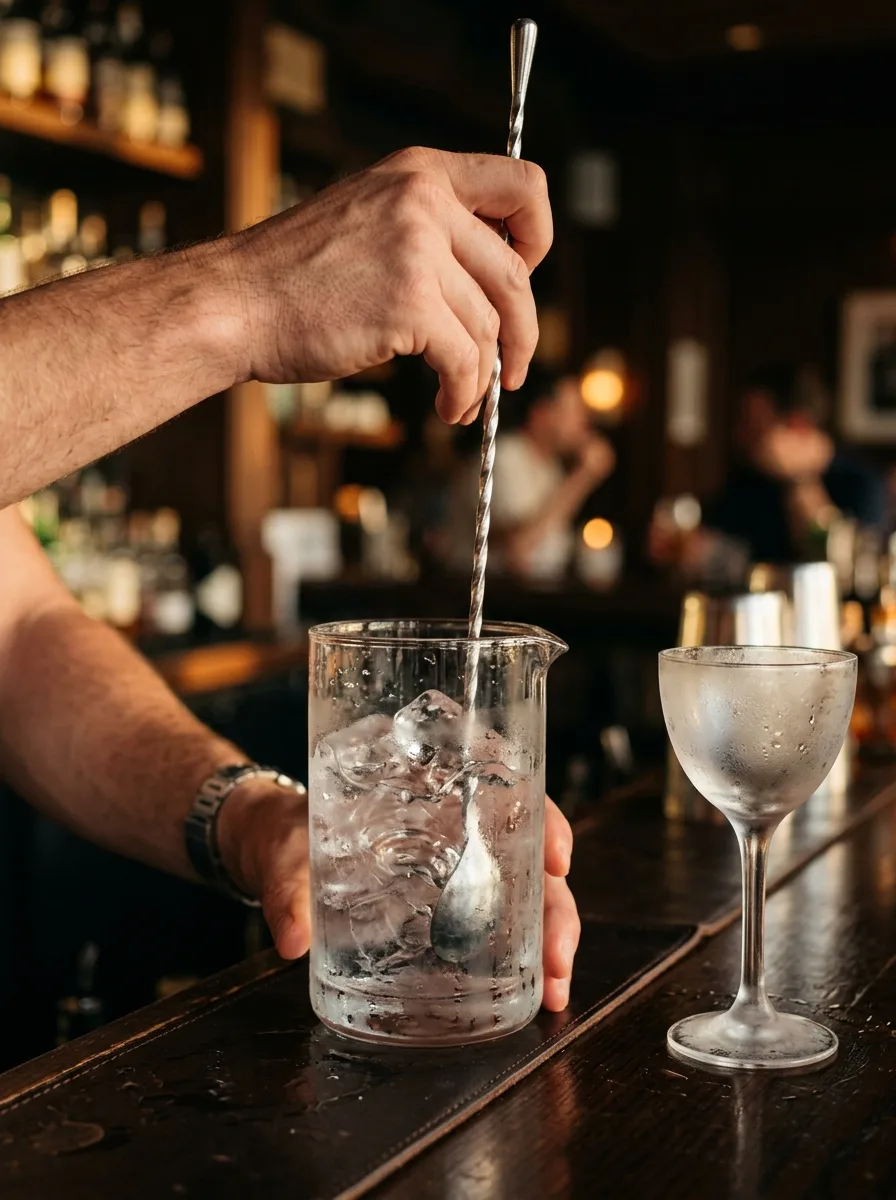
Stirring does two jobs: it chills the drink and adds about 20% water through dilution. Skip either and the martini tastes hot and harsh.
Shaken or Stirred?
Stirred. A martini made of nothing but spirits and vermouth should be clear and silky, and stirring keeps it that way. Shaking breaks tiny ice shards into the drink and makes it cloudy, colder and a little more watery. (“Bruising” the gin is a myth; clarity and texture are the real trade-off.)
If you like it shaken, shake it hard for about 10 seconds and strain through a fine strainer. It is a matter of taste, not a mistake, and it is the right call for a dirty martini or anything with juice in it.
Dry, Wet, Perfect and 50/50: Martini Ratios Compared
“Dry” means less vermouth, not less sweetness. The more vermouth you add, the softer, more herbal and lower in alcohol the drink becomes.
| Style | Gin | Vermouth | Taste |
|---|---|---|---|
| Dry Martini | 2½ oz | ½ oz dry | Crisp, cold, juniper-forward |
| Wet Martini | 2 oz | 1 oz dry | Rounder, more herbal |
| Perfect Martini | 2 oz | ½ oz dry + ½ oz sweet | Gently sweet, deeper gold |
| 50/50 Martini | 1½ oz | 1½ oz dry | Low in alcohol, very aromatic |
| Gibson | 2½ oz | ½ oz dry | Same as dry, with a pickled-onion edge |
The Wet Martini
Two parts gin to one part vermouth is the style Victorian bartenders would recognize. It is gentler than a dry martini and a better choice if you find the classic too sharp.
· Cocktail spec · Zero-proof spec
Martini glassStirred3 minStrong · 27%
Martini glassStirred3 minZero-proof · 0.0%
The pour · 3 oz
The pour · 3 oz
Wet Martini
Cucumber Verjus Martini
Two parts gin to one part vermouth, softer and more herbal.
Ingredients (1 drink)
GarnishGreen olive
Ingredients (1 drink)
GarnishGreen olive
Method
- 1Add everything to a mixing glass with ice and stir for 20 to 30 seconds.
- 2Strain into a chilled glass and garnish with one olive.
Method
- 1Stir everything with ice for 20 to 30 seconds.
- 2Strain into a chilled glass and garnish with a cucumber ribbon or one olive.
How the swap works
More vermouth means more of that wine-like sweetness, so here verjus and cucumber juice play the part and the tea keeps the dry edge.
Enjoy responsibly · legal drinking age only · Zero-proof twin · · 1 oz = 30 ml
The Perfect Martini
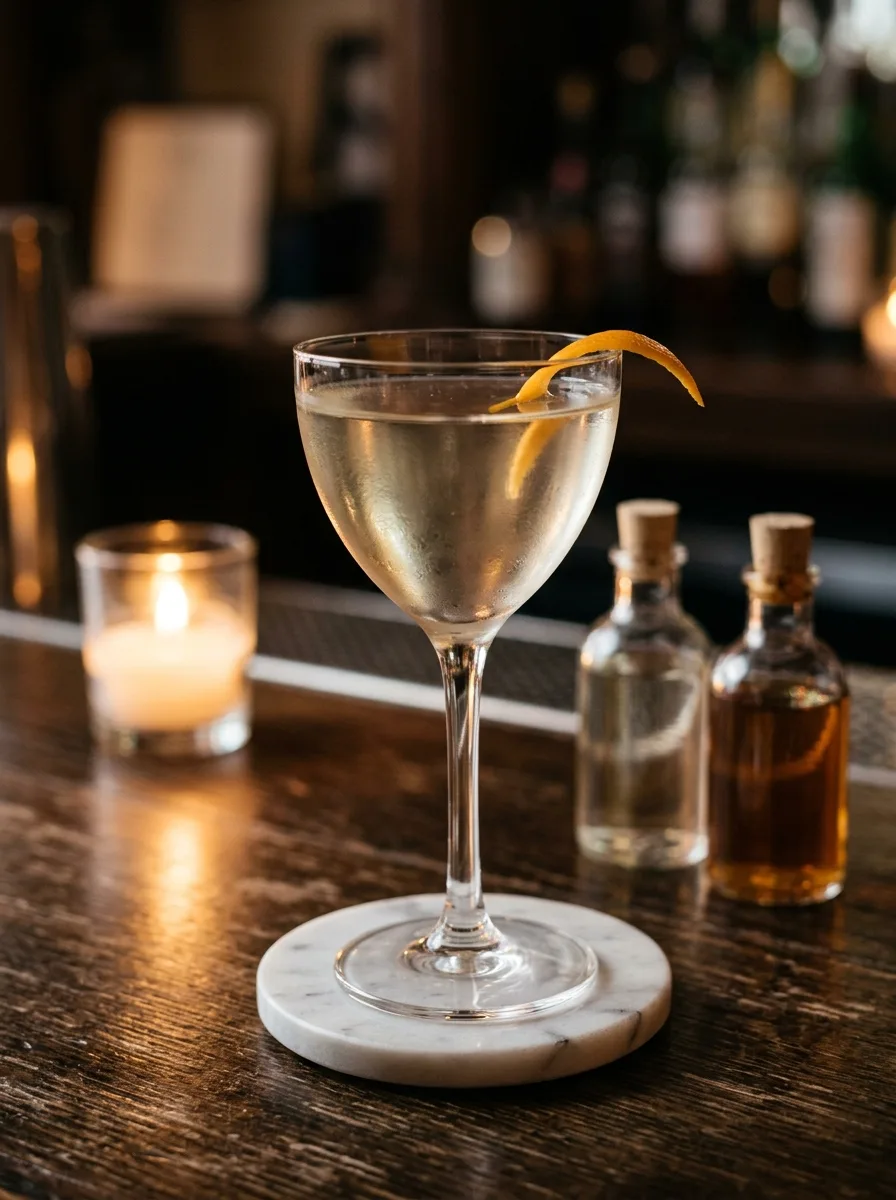
“Perfect” is a bartender’s word for splitting the vermouth between dry and sweet. The sweet vermouth adds a hint of red fruit and turns the color pale gold.
· Cocktail spec · Zero-proof spec
Nick & NoraStirred3 minStrong · 27%
Nick & NoraStirred3 minZero-proof · 0.0%
The pour · 3 oz
The pour · 2¾ oz
Perfect Martini
Golden Tea Martini
Gin with dry and sweet vermouth for a rounder, golden martini.
Ingredients (1 drink)
GarnishOrange twist
Ingredients (1 drink)
GarnishOrange twist
Method
- 1Stir everything with ice for 20 to 30 seconds.
- 2Strain into a chilled Nick and Nora glass.
- 3Express an orange peel over the top and drop it in.
Method
- 1Stir everything with ice for 20 to 30 seconds.
- 2Strain into a chilled glass and express an orange peel over the top.
How the swap works
Verjus supplies the dry-vermouth note and a little rich syrup supplies the sweet vermouth's round, red-fruit sweetness.
Enjoy responsibly · legal drinking age only · Zero-proof twin · · 1 oz = 30 ml
The 50/50 Martini
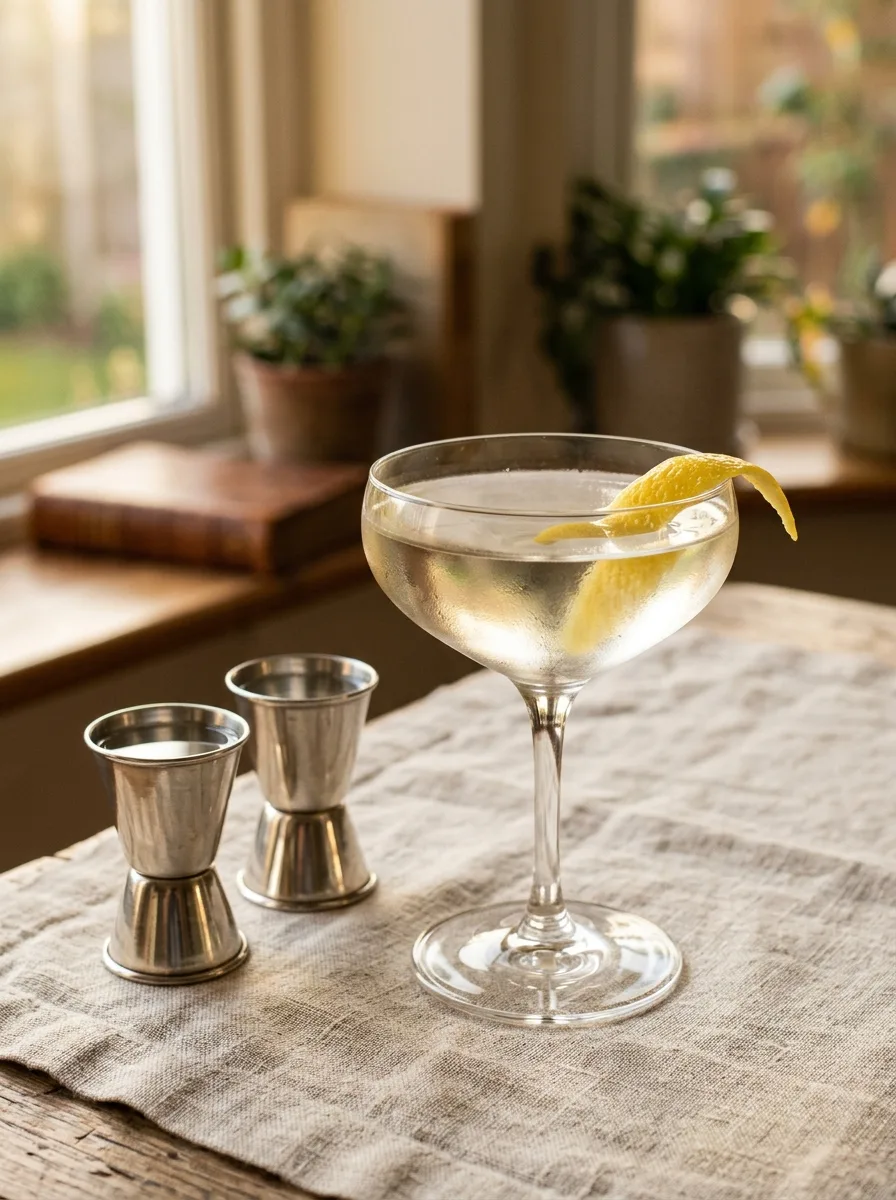
Equal parts gin and dry vermouth, with orange bitters. At roughly 20% ABV after dilution it is the most sessionable martini there is, and the one to make when you want vermouth to be the star.
· Cocktail spec · Zero-proof spec
CoupeStirred3 minStrong · 24%
CoupeStirred3 minZero-proof · 0.0%
The pour · 3 oz
The pour · 2¾ oz
50/50 Martini
Chamomile 50/50 Martini
Equal parts gin and dry vermouth for a low-alcohol, aromatic martini.
Ingredients (1 drink)
GarnishLemon twist
Ingredients (1 drink)
GarnishLemon twist
Method
- 1Stir everything with ice for 20 to 30 seconds.
- 2Strain into a chilled coupe and express a lemon peel over the top.
Method
- 1Stir everything with ice for 20 to 30 seconds.
- 2Strain into a chilled coupe and express a lemon peel over the top.
How the swap works
Chamomile is floral and slightly honeyed, which echoes vermouth's herbal botanicals; verjus keeps it tart rather than sweet.
Enjoy responsibly · legal drinking age only · Zero-proof twin · · 1 oz = 30 ml
Olive, Lemon Twist or Onion?
The garnish is half the flavor. A lemon twist adds bright citrus oil and no salt; olives add a savory, briny note; a pickled cocktail onion makes the drink a Gibson.
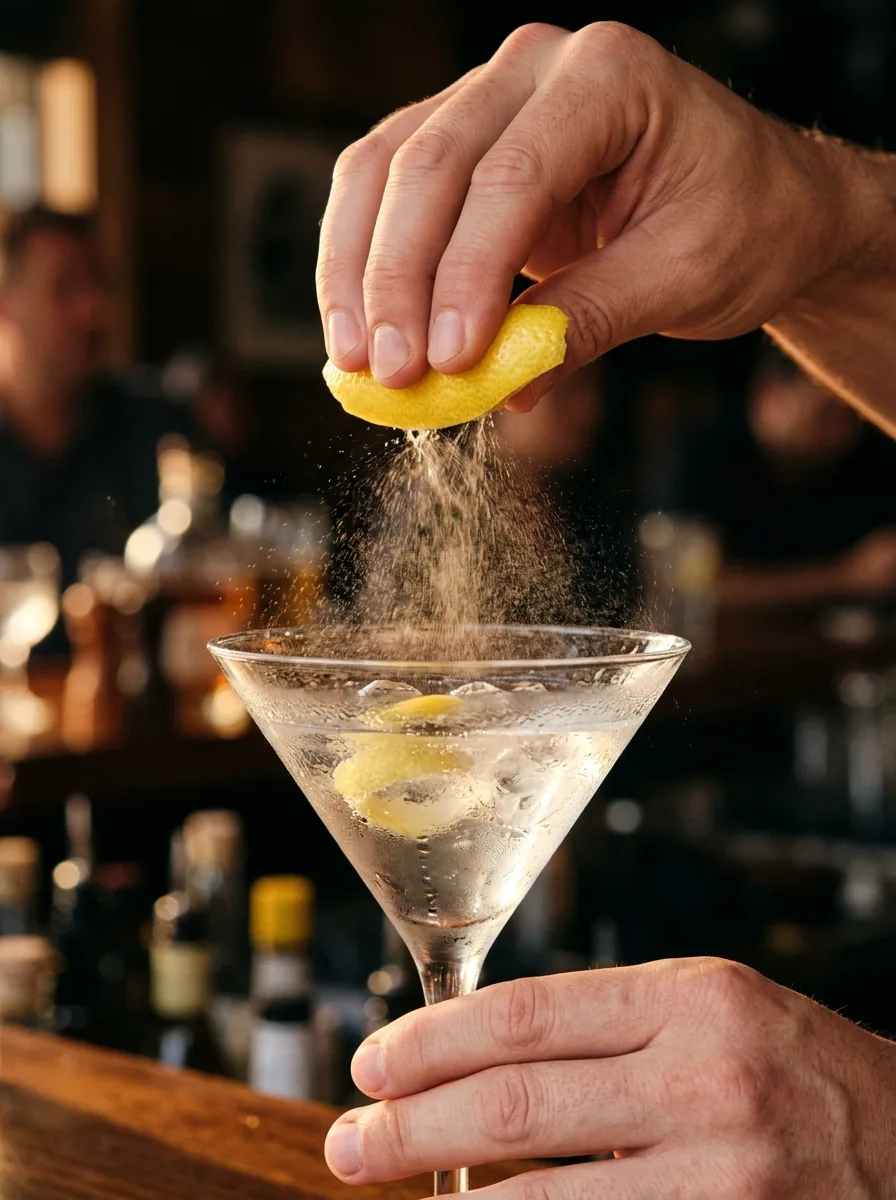
For a twist, cut a wide strip with a peeler, hold it skin-side down over the glass and squeeze it so the oil mists across the surface, then rub it around the rim and drop it in.
The Gibson
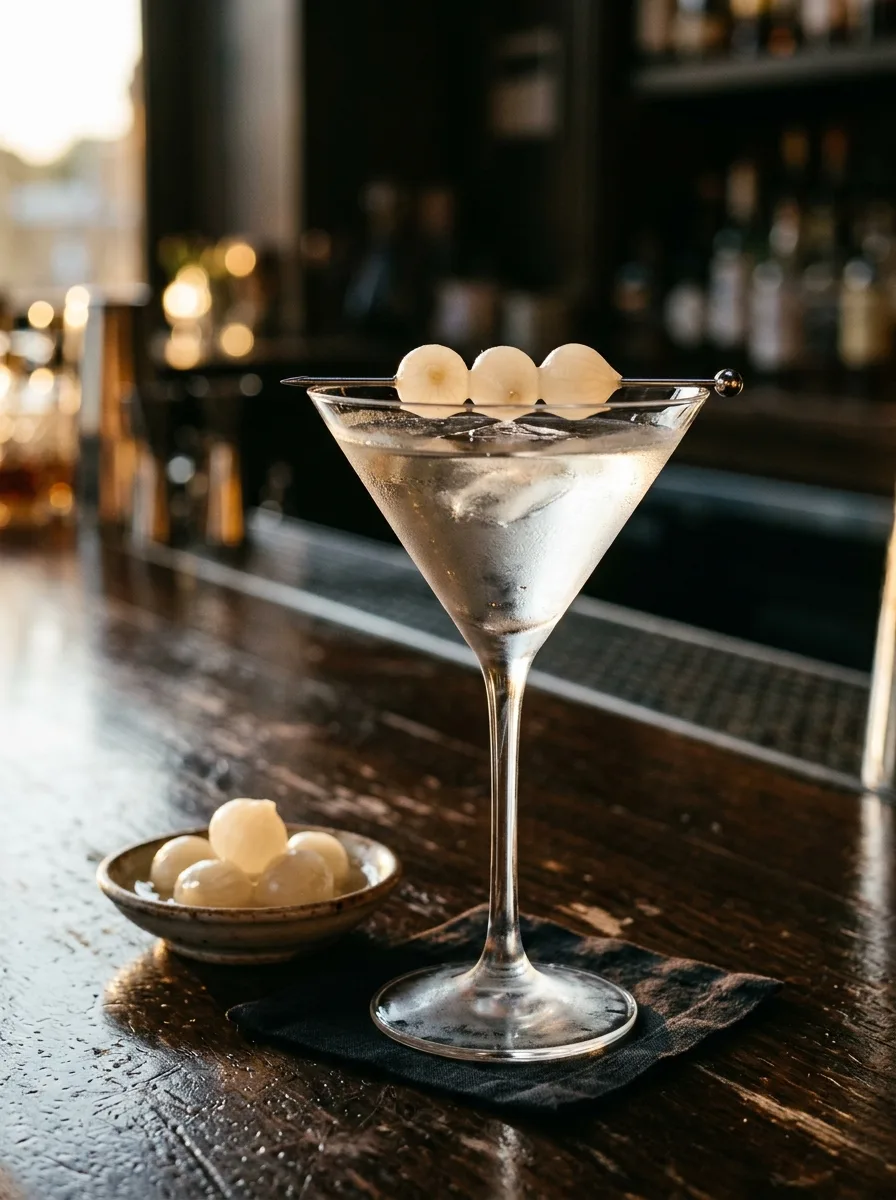
Swap the olive for one or two pickled cocktail onions and you have a Gibson: the same dry martini, with a savory edge that is slightly sharper than an olive.
· Cocktail spec · Zero-proof spec
Martini glassStirred3 minStrong · 30%
Martini glassStirred3 minZero-proof · 0.0%
The pour · 3 oz
The pour · 3¼ oz
Gibson
Pickled Onion Tea Martini
A dry martini with a pickled cocktail onion.
Ingredients (1 drink)
Garnish2 to 3 pickled cocktail onions on a pick
Ingredients (1 drink)
Garnish2 to 3 pickled cocktail onions on a pick
Method
- 1Stir the gin and vermouth with ice for 20 to 30 seconds.
- 2Strain into a chilled martini glass and garnish with the onions.
Method
- 1Stir everything with ice for 20 to 30 seconds.
- 2Strain into a chilled glass and garnish with pickled onions.
How the swap works
A splash of the onion jar's brine brings the savory, sharp edge a Gibson is known for, with no alcohol involved.
Enjoy responsibly · legal drinking age only · Zero-proof twin · · 1 oz = 30 ml
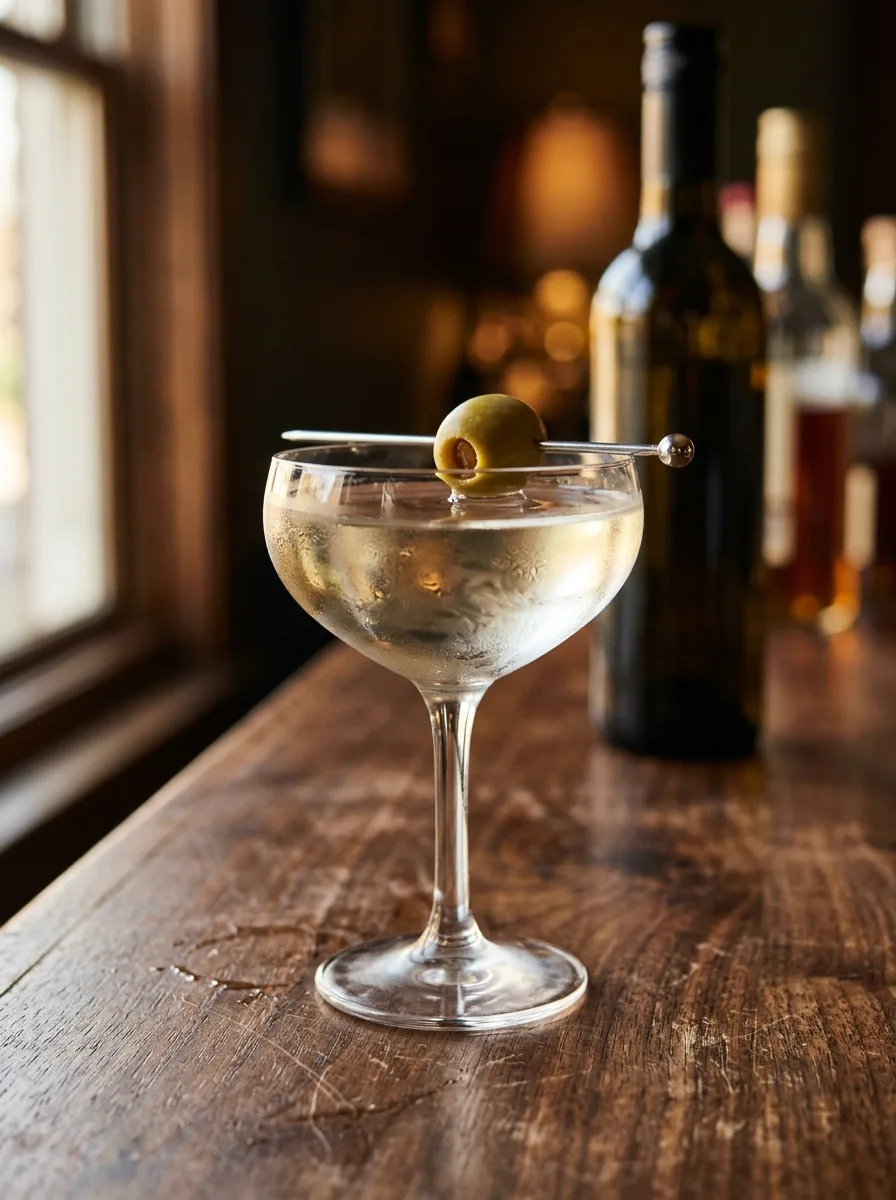
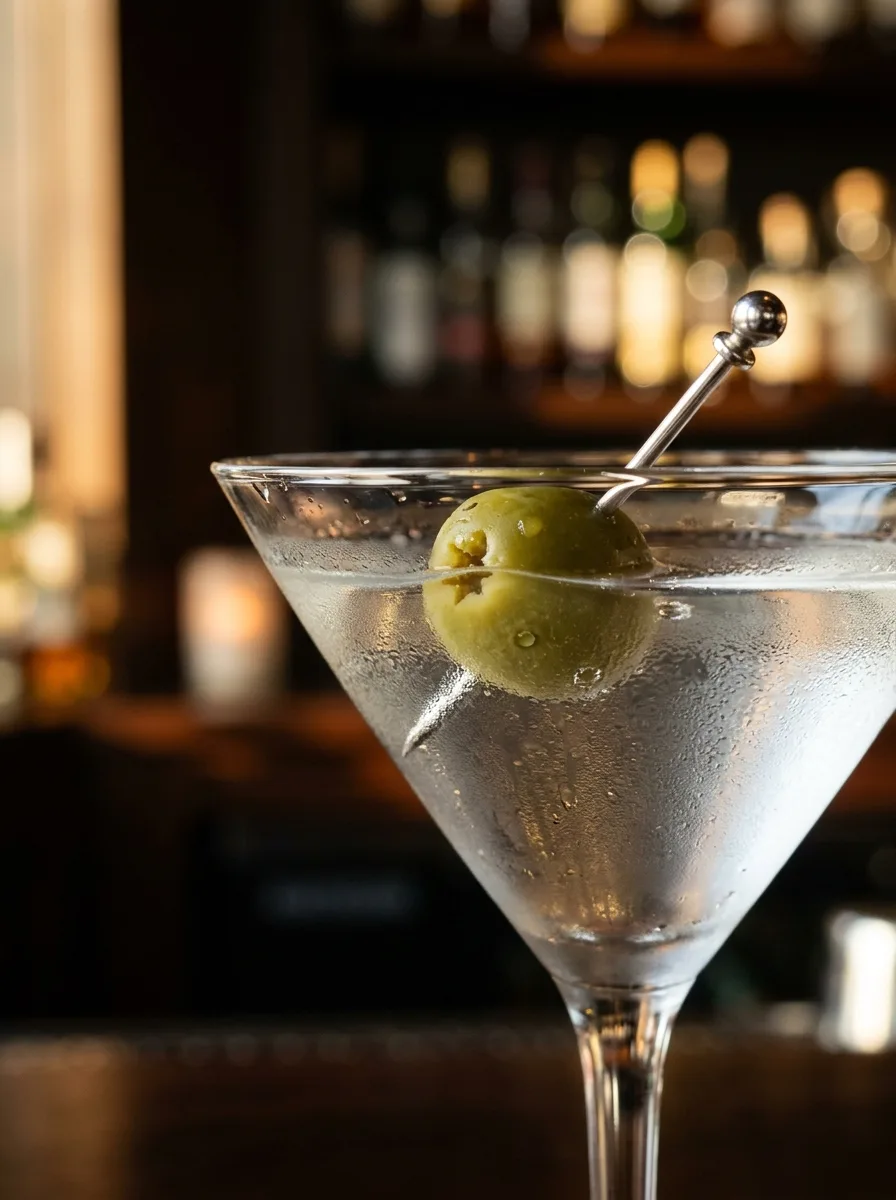
Three olives is traditional, one is plenty, and none is perfectly fine. Use firm green olives and skip anything stuffed with strong flavors unless you are building a dirty martini.
Which Glass: V-Shaped, Coupe or Nick and Nora?
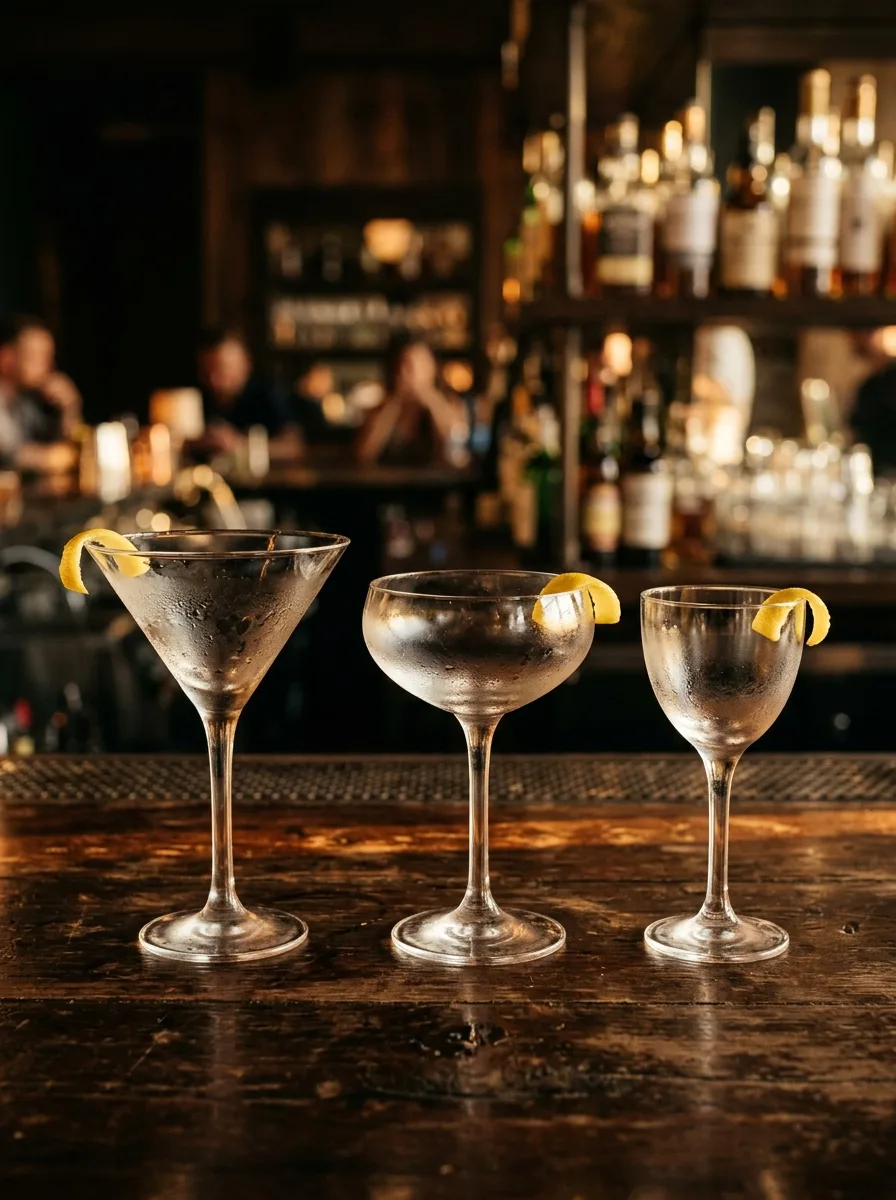
The classic V-shaped glass is the most recognizable, but it spills easily and warms fast. A coupe is easier to carry and a Nick and Nora (a small, deep, rounded glass) keeps the drink coldest for longest. Any of them works as long as it is small (4 to 5 oz) and very cold.
A Zero-Proof Martini That Works
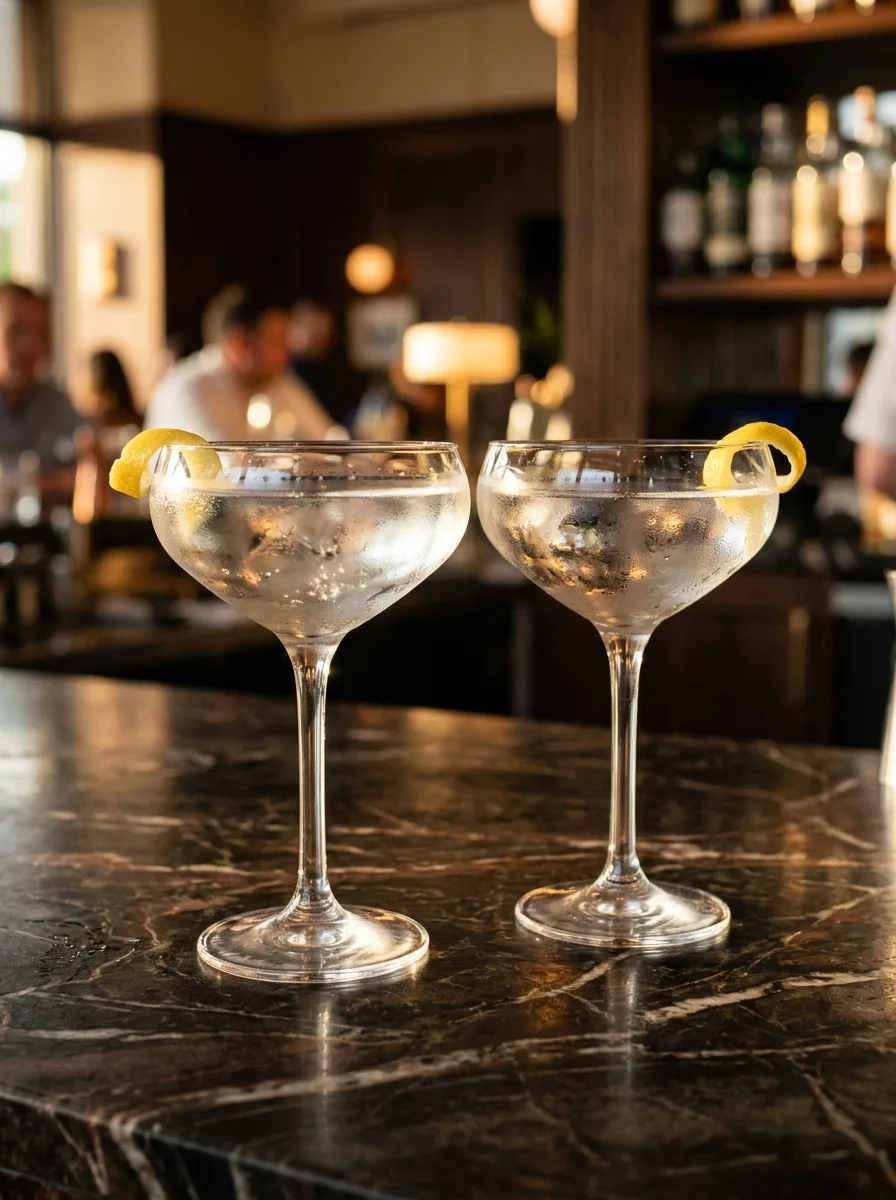
A martini is hard to fake because it is so bare. These twins rebuild what the gin and vermouth do: strong black tea steeped with a few crushed juniper berries gives gin’s dry, resinous grip, verjus stands in for vermouth’s tart, wine-like edge, and a pinch of salt gives the body alcohol normally provides. Stir them with ice and serve in a frozen glass, exactly like the originals.
Hungry for more? The how to make mocktails guide explains the method, and the rest of the family lives in dirty martinis, vodka martinis, chocolate martinis and the 12 types of martinis. Looking for more gin drinks? See gin cocktails and the classic cocktails collection.
Saving this round?
Pin it for the next party — every drink and its twin will be right here.
Last call
Questions from the bar
Q1What is a martini made of?
A martini is gin and dry vermouth, stirred with ice, strained into a chilled glass and finished with a lemon twist or olives. Orange bitters are optional. A modern dry martini uses about 2½ oz gin to ½ oz vermouth.
Q2Is a martini made with gin or vodka?
Traditionally gin. A vodka martini is a different (and very popular) drink, made the same way with vodka in place of gin. If a menu says only "martini", most bartenders will ask which you want.
Vodka martini recipe ↗Q3How much vermouth goes in a martini?
A dry martini uses about ½ oz of vermouth to 2½ oz of gin. A wet martini uses 1 oz to 2 oz of gin, and a 50/50 uses equal parts. Start at ½ oz and add more until it tastes right to you.
Q4Should a martini be shaken or stirred?
Stirred, for the clearest, silkiest drink. Shaking makes a martini colder and cloudier, which some people like. Either way, use plenty of hard ice and strain into a frozen glass.
Q5What does a "dry" martini mean?
"Dry" means less vermouth, not less sugar. A very dry martini has only a rinse or a few drops of vermouth; an "extra dry" martini has almost none.
Q6What is the difference between a martini and a Gibson?
A Gibson is a martini garnished with a pickled cocktail onion instead of an olive or a lemon twist. The drink is otherwise identical, but the onion adds a sharper, savory edge.
Types of martinis ↗Another round?
Pour the next one
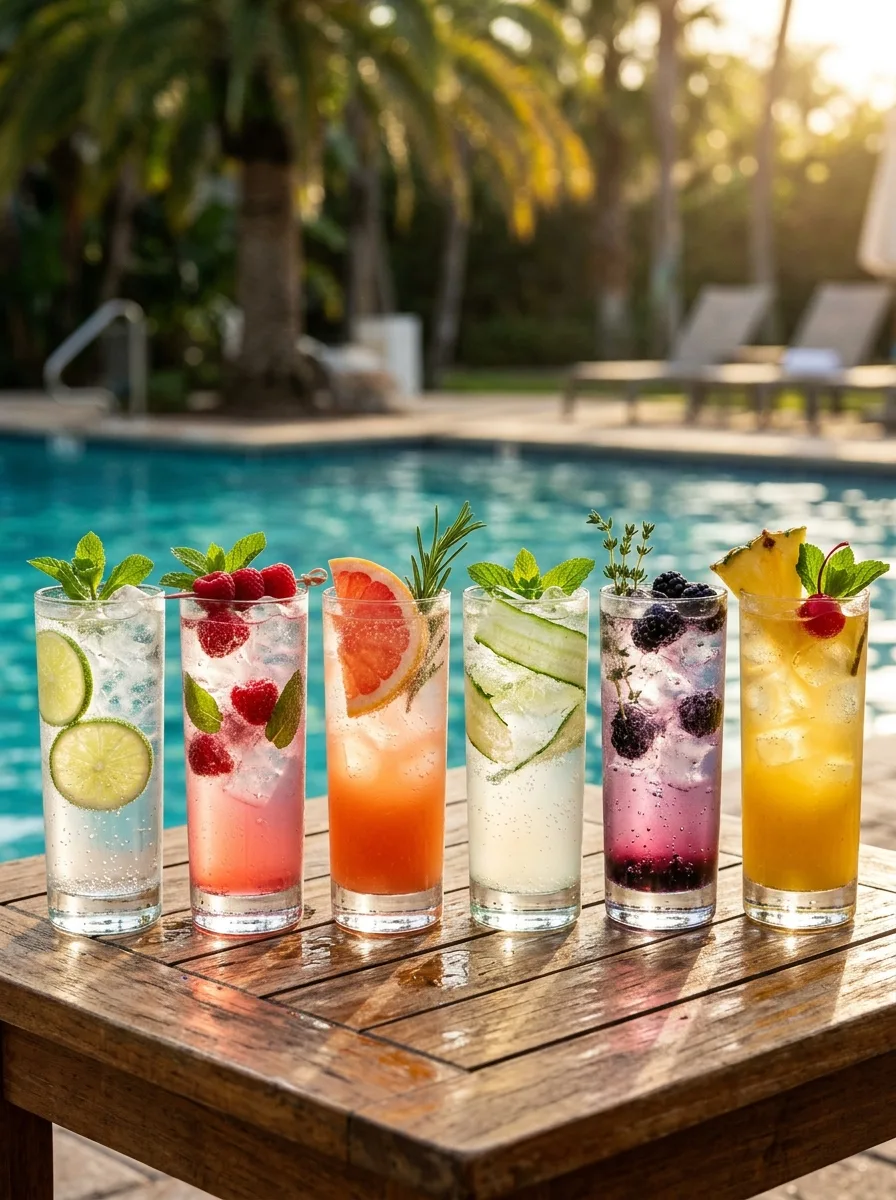
- N° 01Vodka Seltzer6 drinks ⇄ 66 Easy Spiked Seltzer Recipes You Can Make at Home (With Zero-Proof Twins)Cocktails · Vodka · 6 drinks ⇄ 6
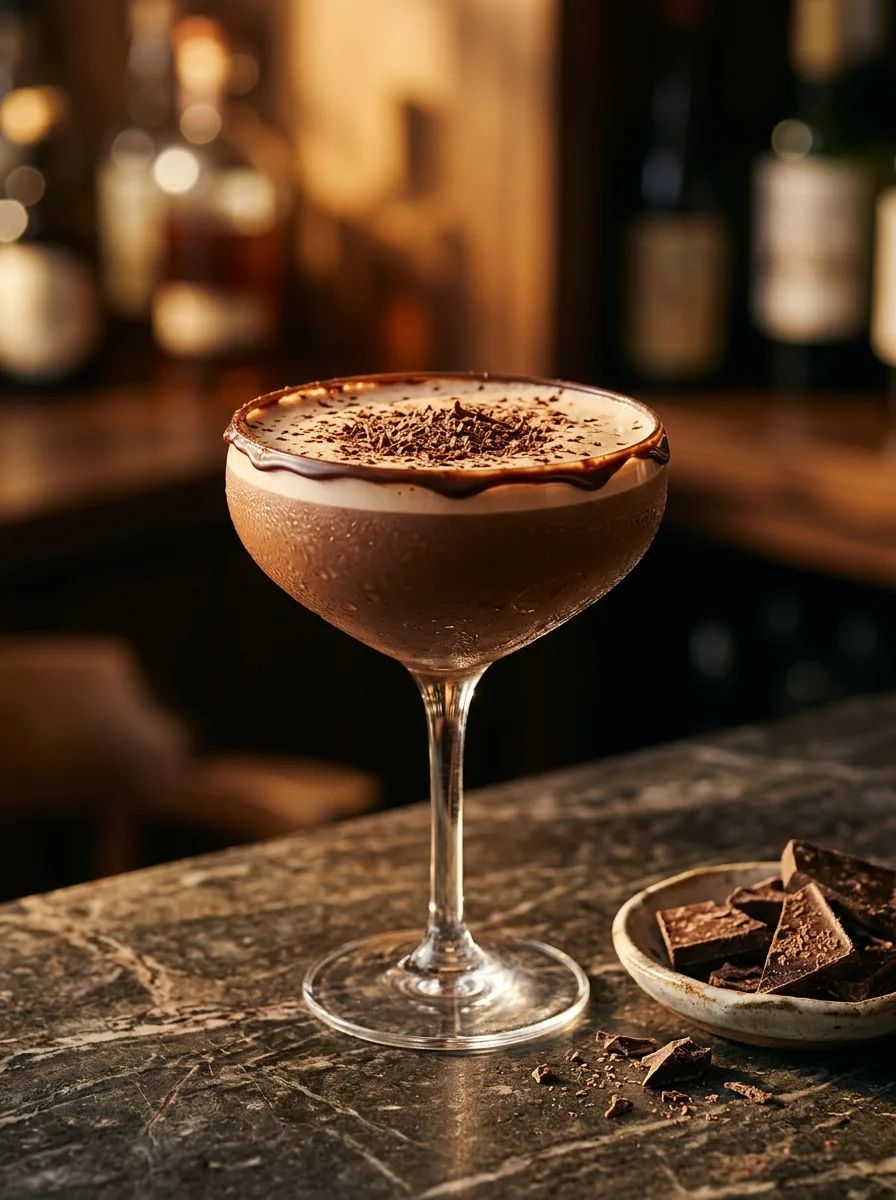
- N° 02Chocolate Martini Recipe5 drinks ⇄ 5Rich, Creamy and Easy (With a Zero-Proof Twin)Cocktails · Vodka · 5 drinks ⇄ 5
- N° 03Bottled Cocktails5 drinks ⇄ 5How to Make Pre-Mixed, Ready-to-Pour Cocktails at HomeParty & Batch · Batch & Pitcher · 5 drinks ⇄ 5